New car configurator
Lamborghini · 2023
Key info
Impact
Qualitative outcomes: no usage metrics were shared with me for this project.
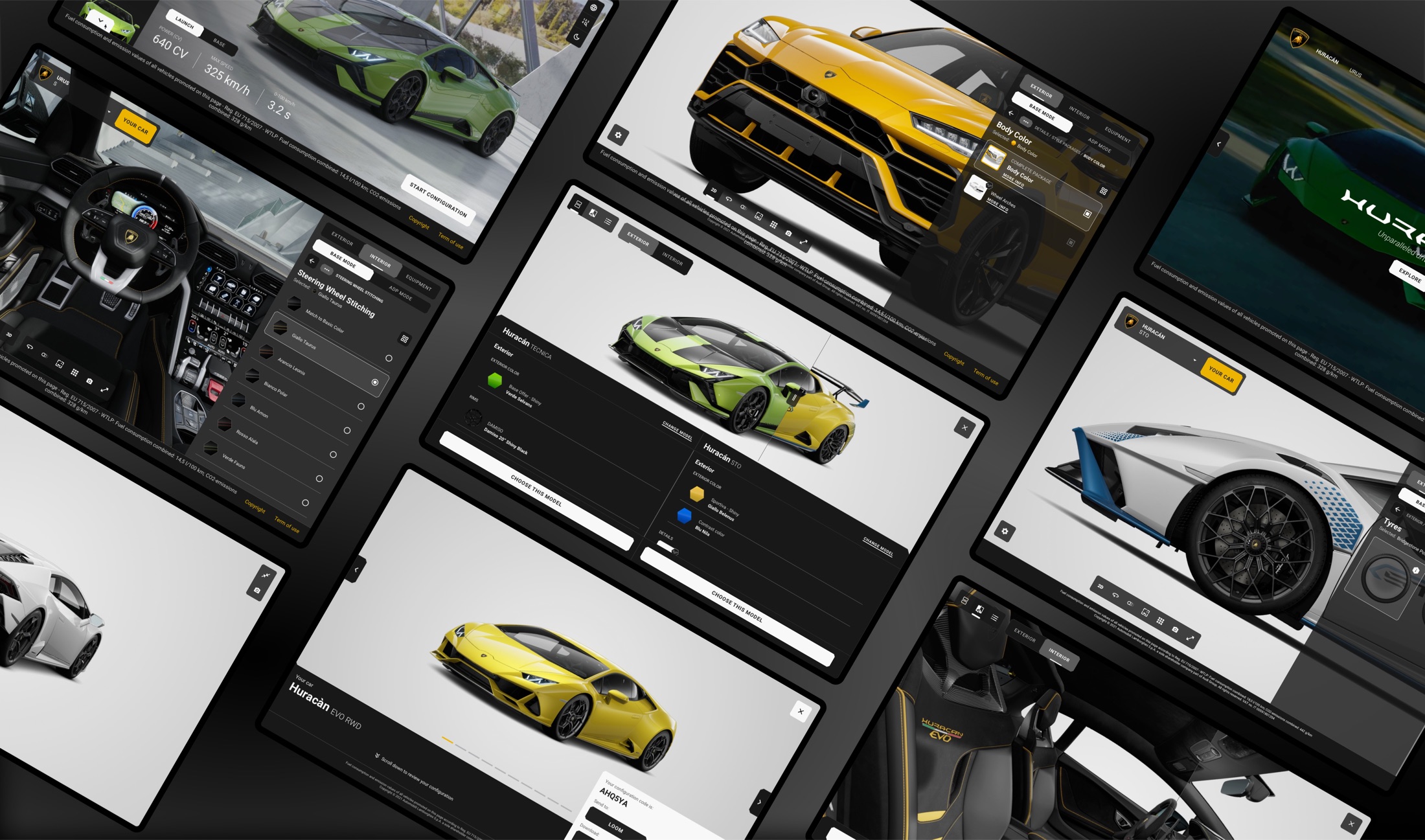
Redesigning where users explore, customize and emotionally connect with the brand before purchase.
Project overview
The Lamborghini car configurator is a key touchpoint in the customer journey, where users explore, customize and emotionally connect with the brand before purchase.
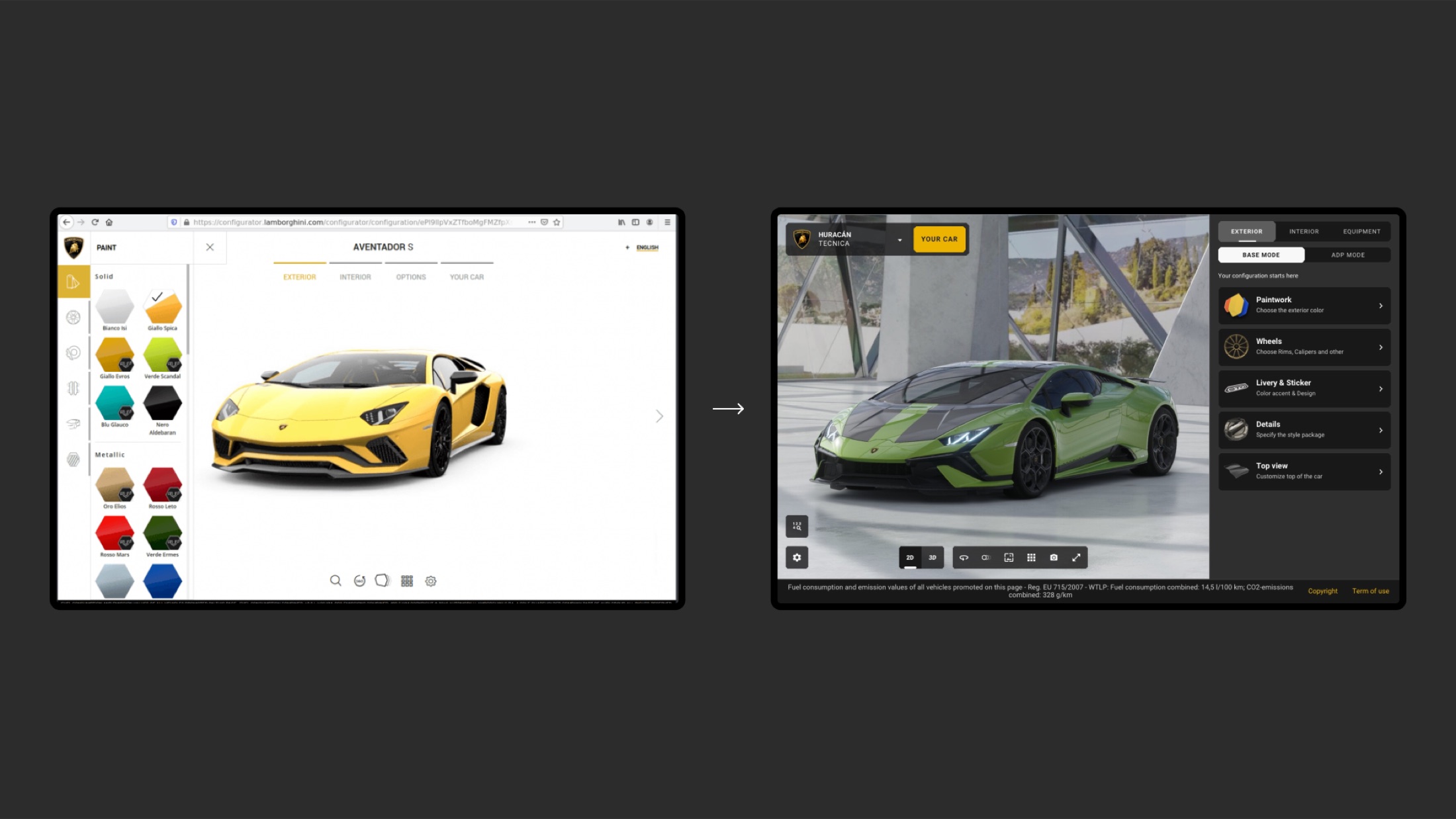
The existing configurator no longer reflected Lamborghini’s visual language and presented several usability issues, especially in navigation and option discoverability. The goal of the project was to redesign the configurator to better express the brand’s identity while improving clarity, scalability and ease of use across devices.
Context & problems
The original configurator suffered from:
- An outdated UI that didn’t match Lamborghini’s premium and futuristic positioning
- Unclear navigation and option hierarchy
- Difficulty in understanding selected configurations and differences between versions
- Limited scalability for future models and features
These issues created friction during configuration and made the experience less engaging than expected for such a high-end product.
Goals
I had to improve usability and clarity throughout the entire configuration and reinforce Lamborghini’s brand values with new UI and interactions.
To support a long-term vision of the product, I was asked to create a Design System that could support both desktop and mobile experiences.
A final key goal was to reduce decision friction by helping users better understand their choices and compare different configurations.
My role
I worked as a Product Designer focused on UI, owning the visual and interaction layer of the configurator across platforms. I led UI decisions, contributed to the information architecture and collaborated closely with developers and stakeholders to align design solutions with technical and business constraints.
I also helped build and evolve parts of the design system, created interactive prototypes and supported development with detailed UI specifications and animations.
The process
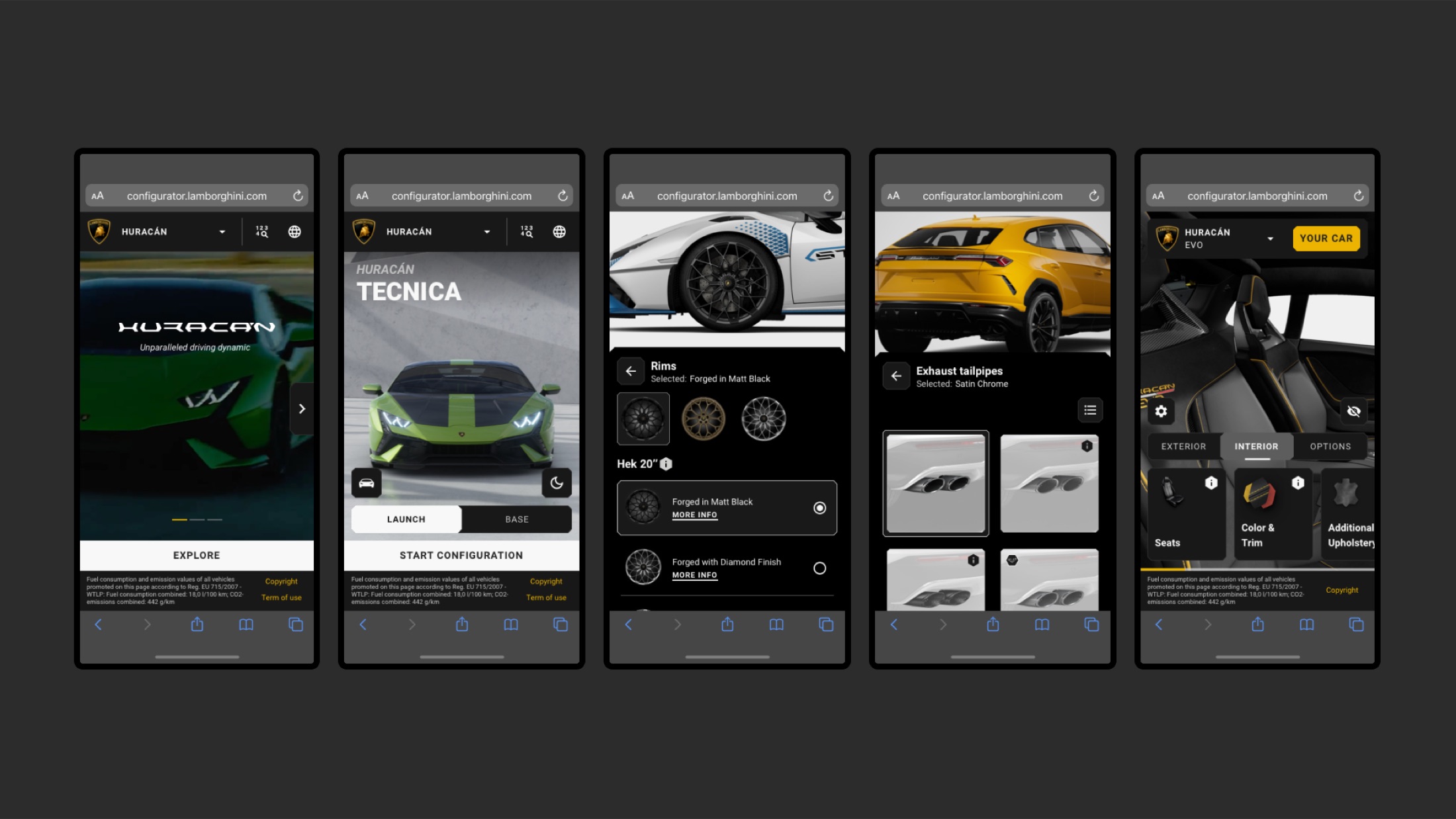
The project started with an analysis of the existing architecture to identify usability issues and structural inconsistencies. This led to a clearer information architecture, focused on improving navigation, option grouping and visibility of selected configurations.
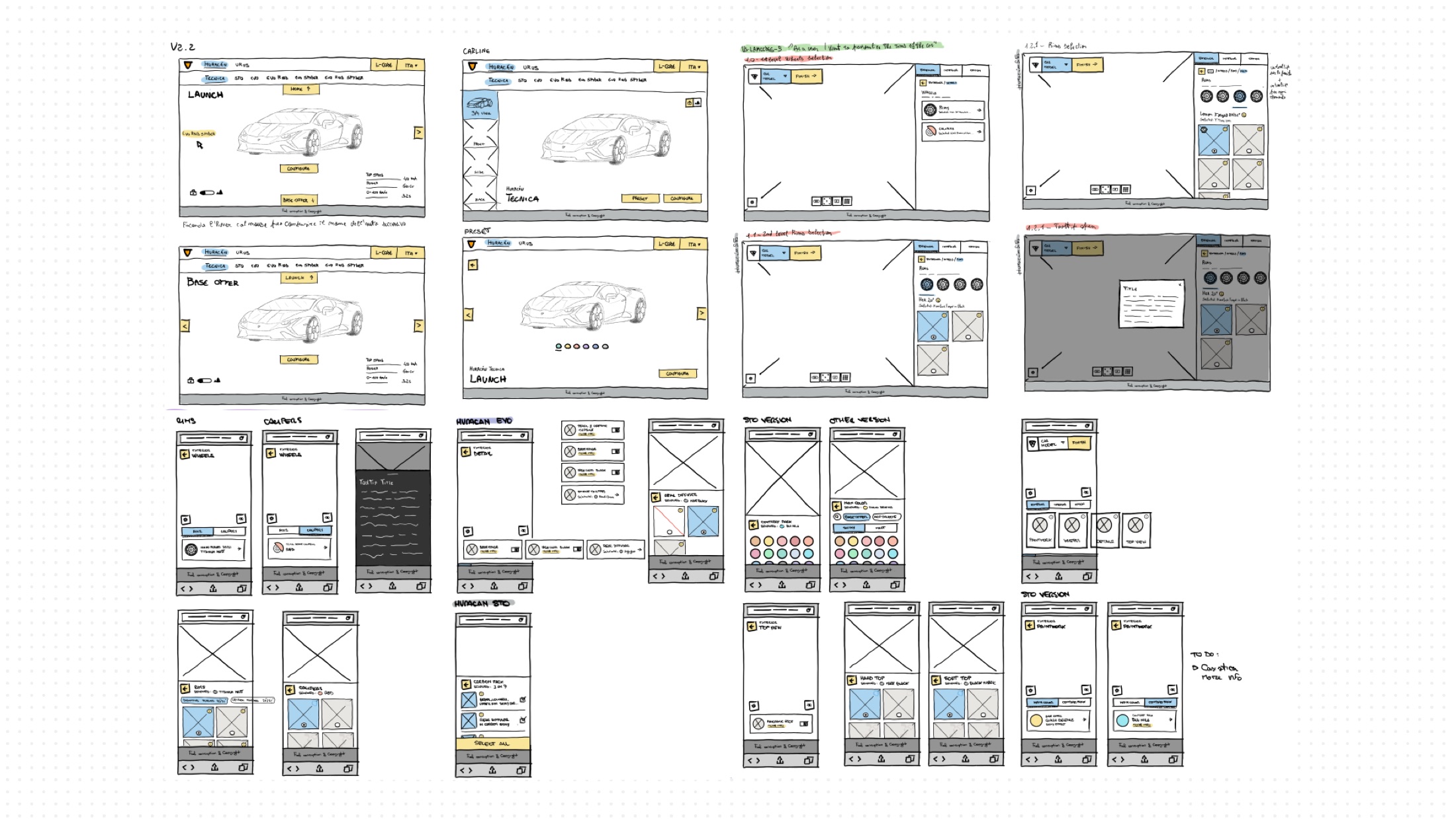
We then explored solutions through extensive sketching, iterating quickly on layouts and interaction models for both desktop and mobile before moving into high-fidelity design.
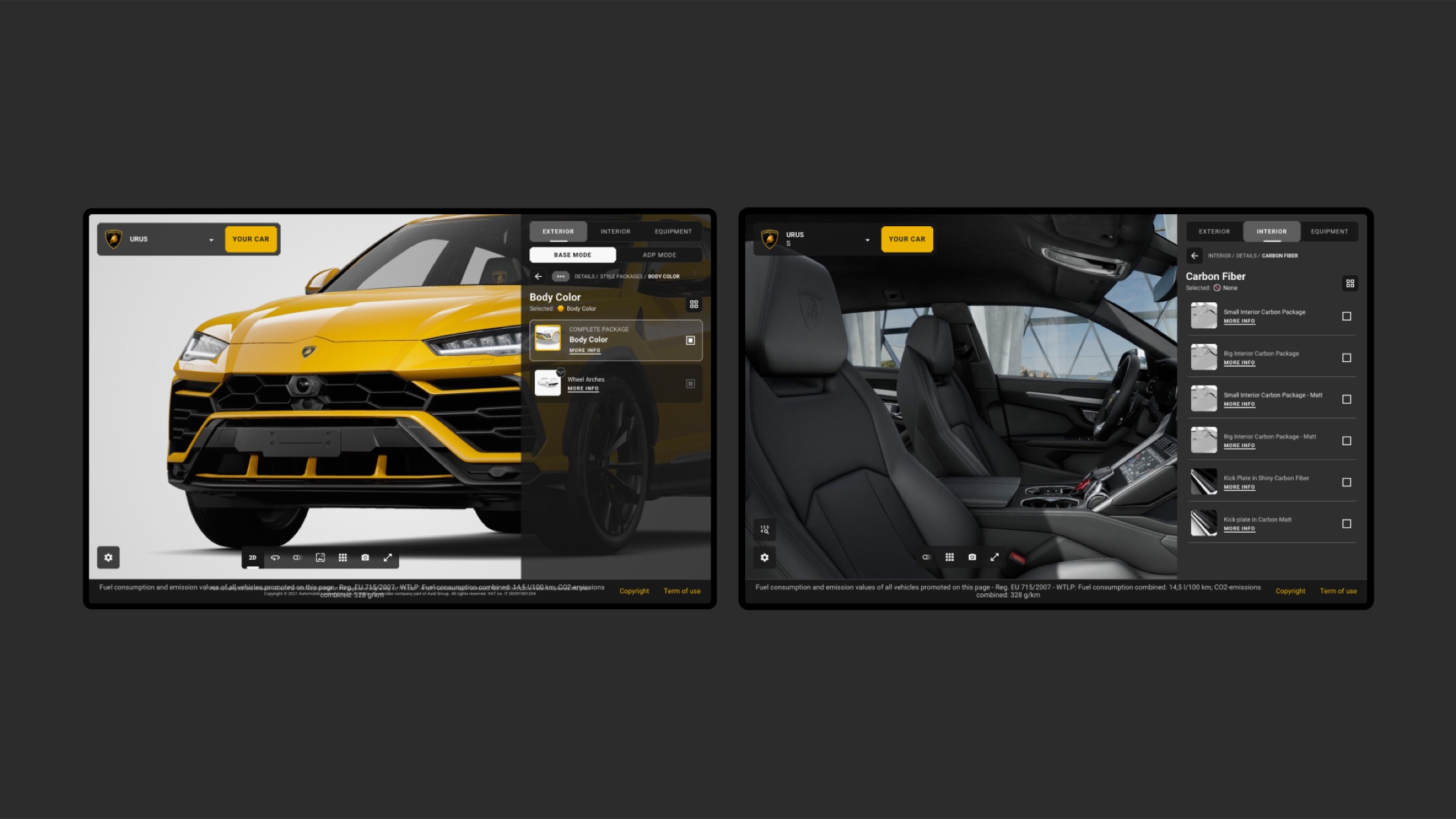
The final UI draws from Lamborghini’s visual language, using sharp geometries, layered interfaces and micro-interactions to create a futuristic yet usable experience.
Key feature
Configuration comparator
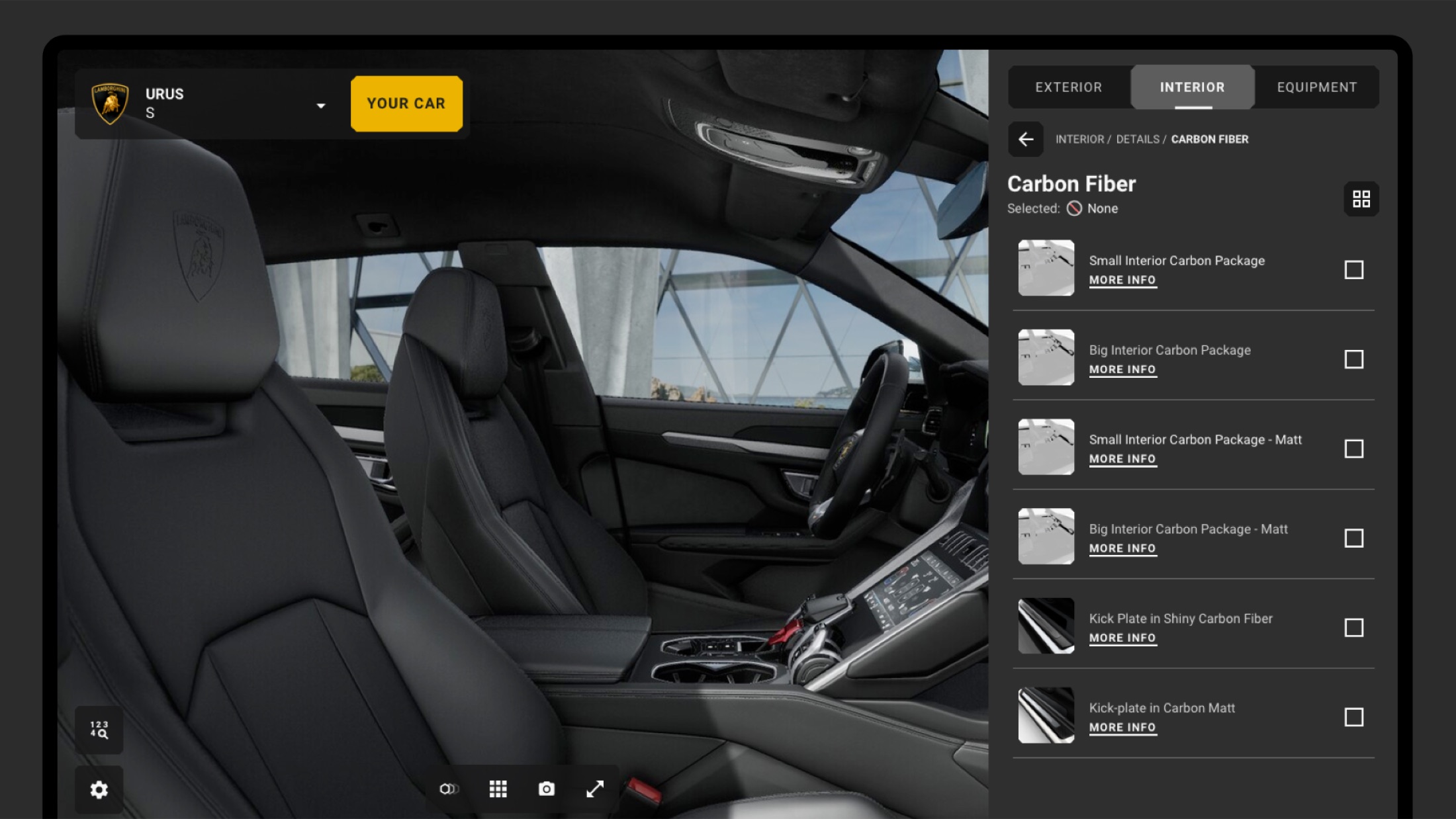
The configuration comparator was designed to help users understand differences between configurations without losing context. It allows side-by-side comparison of different setups, supporting faster and more confident decision-making.
Outcome & learnings
The redesigned configurator delivers a clearer and more intuitive experience, better aligned with Lamborghini’s premium positioning. A more structured UI and design system improved maintainability and created a scalable foundation for future models and features.
This project highlighted the importance of balancing strong visual identity with clarity in complex interfaces. Early alignment on information architecture and frequent prototyping proved essential when working with multiple stakeholders and long-term scalability requirements.